binpack is a minimalist numeric binary packing utilities for node.js.
I’m working some utilities for OSC support in node, and I noticed that there was no really simple way to convert from native javascript types to and from the binary buffers required for OSC messages.
It turned out to be a nice project to get my feet wet with making native node extentions.
The code is free on github, and it’s uploaded to npm. To grab it, first make sure you have npm installed, then run
npm install binpack
The source code should provide a good example of a simple node extension.
I’ve made a quick emulation of the Remco Sound FX Machine as an audio unit and standalone application for Macintosh. The original was quite an interesting toy based on a Texas Instruments noise chip used in Space Invaders. I’ve never owned this toy or seen this chip, so the emulation is really just guesswork based on reading the datasheet. The UI was designed by the estimable ghostfacter (ghostfactor?) Eric, and the icon for the .app was drawn by Kate Lindsay. All artwork is public domain, and the source code is open (new code is under a permissive license, JUCE is GPL, pdlib is BSD).
One of my favorite things about electronic dance music is how tirelessly and mindlessly popular synth sounds are exploited. It’s awesome! One of the big sounds of the turn of the millennium was the so-called supersaw, an extremely bright, cold, digital, huge lead sound. You rarely hear it now in non-ironic music, but anyone who was listening to anything dancey and stupid around 2003 will surely recognize it.
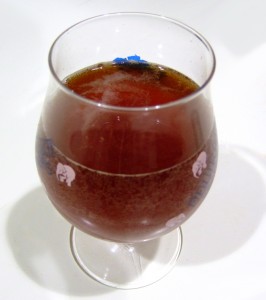
For this beer we tried using heather as the bittering agent. Heather was a herb traditionally used in Scotland for beer production before the arrival of hops.
This was also our first attempt at a smaller batch size, and an all grain (no extracts used) brew!
The beer came out with a clean sour flavor that allows you to detect the heather underneath. Final alcohol content was 4.4%.
Our latest beer, dubbed the “Berenstain Beer” was made specially with everything bears love.
The beer came out to a final 9.5% alcohol, with an (expected) cidery taste, but surprisingly dry for the alcohol content, and with lots of fresh apple flavor.
Berenstain Beer
Finished beers with decorative caps
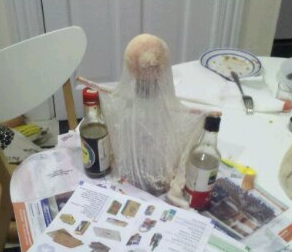
Fermenter after brewing the Berenstain Beer. Looks gross, tasted great
Processing is a Java-based programming environment that has done a great job of branding itself as accessible and empowering to newcomers, technophobes, and artists. While I strongly oppose some of the programming practices it encourages (global side-effects, etc.), it’s hard not to value a tool that makes it so fast and convenient to distribute simple ideas.
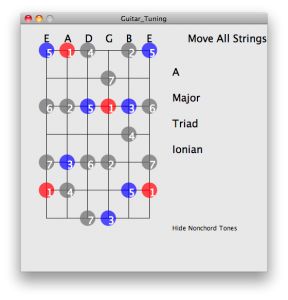
This morning, as my first encounter with processing, I came up with this simple sketch to map out chords and scales in alternate guitar tunings.